
Have you ever wanted to speak up but found yourself staying quiet? Or wanted to get closer to someone but felt the urge to pull away?
Sometimes, we can feel two different things at once. One part of us wants change, while another wants to stay safe. We may know what we want, yet still find ourselves reacting in ways we do not fully understand.
These experiences can leave us feeling confused or frustrated with ourselves. But what if, instead of judging these reactions, we become curious about them?
Parts work offers a way to explore the different feelings, needs, and responses within us. It can help us understand why we react in certain ways and develop a kinder relationship with ourselves.
What Is Parts Work?
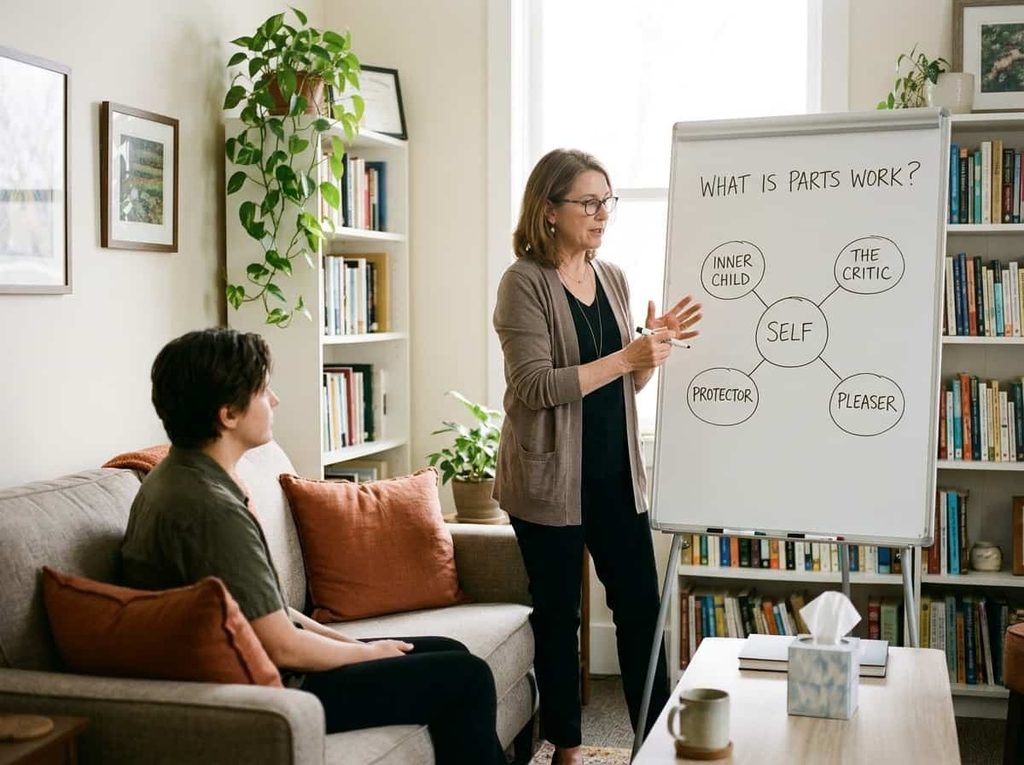
Parts work is an approach that helps you understand different sides of your inner experience. These may include your fears, hopes, protective responses, and emotional needs.
For example, you might have a part of you that wants to try something new and another part that worries about getting it wrong. You may want to be honest about your feelings but also fear disappointing someone.
These different responses are a normal part of being human. They do not mean that something is wrong with you.
One approach connected to this work is Internal Family Systems (IFS). It explores how different inner parts may influence our thoughts, feelings, and actions.
Rather than trying to push uncomfortable feelings away, this approach encourages curiosity. Where you can begin to explore what you feel, what you need, and what might be behind a particular response.
Why Do We Have Different Parts of Ourselves?
Our experiences can shape how we respond to the world. Over time, we may develop ways of dealing with difficult emotions or situations.
For example, you might learn to keep everyone happy because conflict once felt difficult to handle. You may try to control every detail because uncertainty makes you uncomfortable.
These responses may have helped you cope in the past. However, they may not always support the person you are becoming today.
Understanding these patterns can help you make more conscious choices instead of feeling controlled by automatic reactions.
Understanding the Different Parts Within You

There is no single list of parts that everyone must have. Each person’s experiences are different. However, some common responses you may recognise in yourself.
The Part That Tries to Protect You
Have you ever avoided a difficult conversation, even when you knew it was important?
Perhaps you stay quiet to avoid conflict, hide your feelings to prevent rejection, or try to keep everything under control.
These responses may be ways of protecting yourself from discomfort or hurt.
Instead of asking, “Why am I like this?” try asking, “What might I be afraid of right now?”
This small change can help you approach yourself with more understanding.
The Part That Feels Hurt or Overlooked
Sometimes, a situation can bring up feelings that seem stronger than expected.
A delayed reply might leave you feeling unwanted. Feedback at work might feel like a personal failure or attack. A disagreement might make you worry that someone will leave.
These reactions can have many causes. In some cases, they may connect with earlier experiences of rejection, criticism, or not feeling understood when you were younger.
Taking time to notice these feelings can help you understand what the situation means to you and what you might need in that moment.
The Part That Wants Something Different
You may also recognise a side of yourself that wants to make changes.
It might want to set healthier boundaries, speak honestly, try something new, or build more secure relationships.
However, another response may hold you back because change feels uncertain.
You do not have to force yourself to choose one side and reject the other. You can acknowledge both your desire for change and your need to feel safe while exploring what comes next.
How Childhood Experiences Can Influence Your Responses

Our early experiences can influence how we see ourselves and relate to others.
For example, a child who often feels criticised may grow up worrying about making mistakes. Someone who feels responsible for keeping the peace at home may find it hard to say no as an adult.
These patterns do not affect everyone in the same way, and not every present-day struggle comes from childhood. However, looking at earlier experiences can sometimes help us understand why certain situations feel so difficult.
This is where inner child healing can connect with exploring different parts of yourself.
You may begin to notice that a current reaction brings up an older feeling or need. With time, patience, and support, you can explore these experiences and find new ways to respond.
The goal is not to blame your past. It is to understand yourself more clearly in the present.
How to Begin Exploring Your Different Parts

You do not need to understand everything about yourself at once. You can start with small moments of reflection in your everyday life.
1. Notice What You Feel
When you experience a strong emotion, pause if it feels safe to do so.
Ask yourself:
- What am I feeling right now?
- What happened just before I felt this way?
- What do I notice in my thoughts or body?
Try to name the feeling without judging yourself for having it.
2. Get Curious About Your Response
Once you notice your reaction, explore it gently.
You might ask:
- What am I worried might happen?
- What am I trying to avoid or protect myself from?
- What do I need right now?
You do not have to find an immediate answer. Sometimes, simply asking these questions can help you see a situation differently.
3. Respond With Compassion
It can be easy to become frustrated with ourselves when we repeat an old pattern.
Instead of calling yourself weak, difficult, or overly sensitive, consider what might be happening beneath the surface.
You can acknowledge your feelings while still choosing how to act. Understanding a reaction does not mean you must follow it.
If reflection brings up intense or distressing feelings, take a break and consider seeking support from a suitably qualified mental health professional.
How Parts Work Connects With Inner Child Healing
Inner child healing focuses on understanding and caring for the feelings, beliefs, and experiences connected with our younger selves.
Exploring different inner responses can complement this process. For example, you might notice that a fear of rejection feels connected to an earlier experience of not feeling accepted.
Rather than dismissing that feeling, you can explore what it means to you and what kind of support you need now.
Both approaches can encourage self-awareness, compassion, and a deeper understanding of your emotional patterns.
At Inner Me Energetics, Kel offers Inner Child + Parts Work as part of her approach to helping people explore their inner experiences and healing journeys.
If you would like to explore this further, you can learn more about Inner Child Healing & Parts Work and see whether working with Kel feels right for you.
Start by Getting to Know Yourself
You do not have to judge every part of yourself that feels afraid, uncertain, or protective. These responses may have developed for reasons that make sense when you take the time to explore them.
Start small. Notice what comes up, give yourself room to reflect, and remember that understanding yourself is a process.
If you feel ready to explore your inner experiences more deeply, discover Inner Child Healing & Parts Work with Kel at Inner Me Energetics.
You can take the next step at your own pace.